Case study
Les fours à pizza, a buying guide built on sources
lesfoursapizza.fr is an independent project we designed end to end: a French-language guide to choosing a pizza oven, live since 4 October 2026.
The project
Gas, wood, electric, multi-fuel: someone hesitating over a €300–1,000 pizza oven finds plenty of opinions and few reliable benchmarks. lesfoursapizza.fr aims to be that benchmark: a guide that helps people choose, compare and get the most from their oven, with the polish of a good online shop — product sheets, tables, filters — without selling anything directly.
The site is funded by affiliation, and that is exactly where it counts: on this kind of site, it’s tempting to display unverifiable scores and “tests”. We chose the opposite, and wrote it into the code itself.
≈ 3,400
Google searches analysed and sorted by intent before a single line was written
57
sources cited, downloaded and re-read before launch
18 / 18
product sheets matching the manufacturers’ official specifications
What we built
The polish of a shop, the honesty of a guide
Before the first page, an analysis of real searches set the site’s structure and the 30 pages to write first.
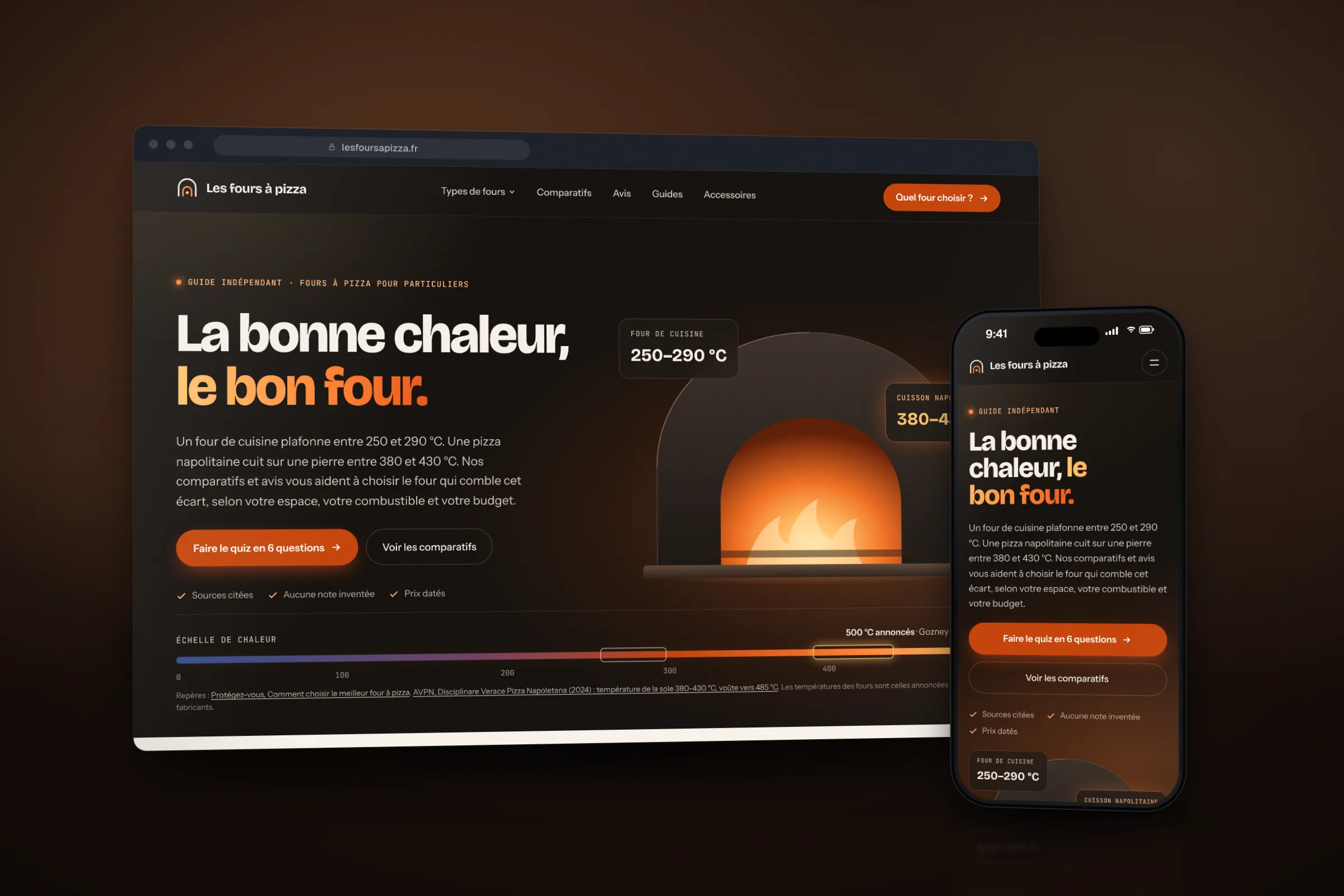
An identity born of the subject: heat
The areas where you decide are dark as charcoal, lit by embers; the reading areas stay light, the colour of flour. The site’s signature is a 0–500 °C temperature gauge with sourced markers: a kitchen oven tops out around 250–290 °C, while the floor for a Neapolitan pizza reaches 380–430 °C.
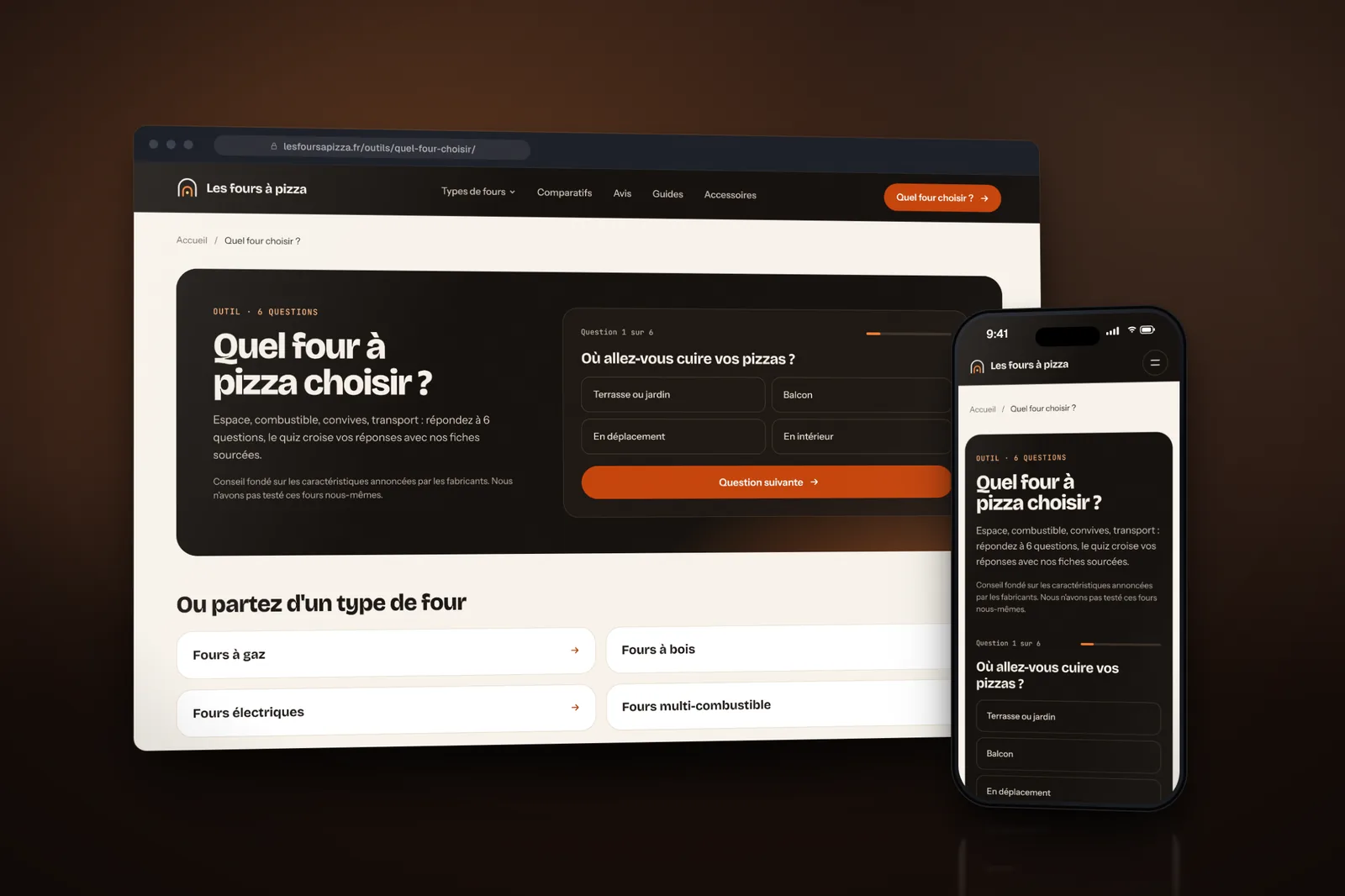
A quiz that recommends without selling
Six questions — space, fuel, number of guests, portability — and a recommendation based solely on the specifications published by manufacturers: no prices, no scores, no sponsored “best pick”.
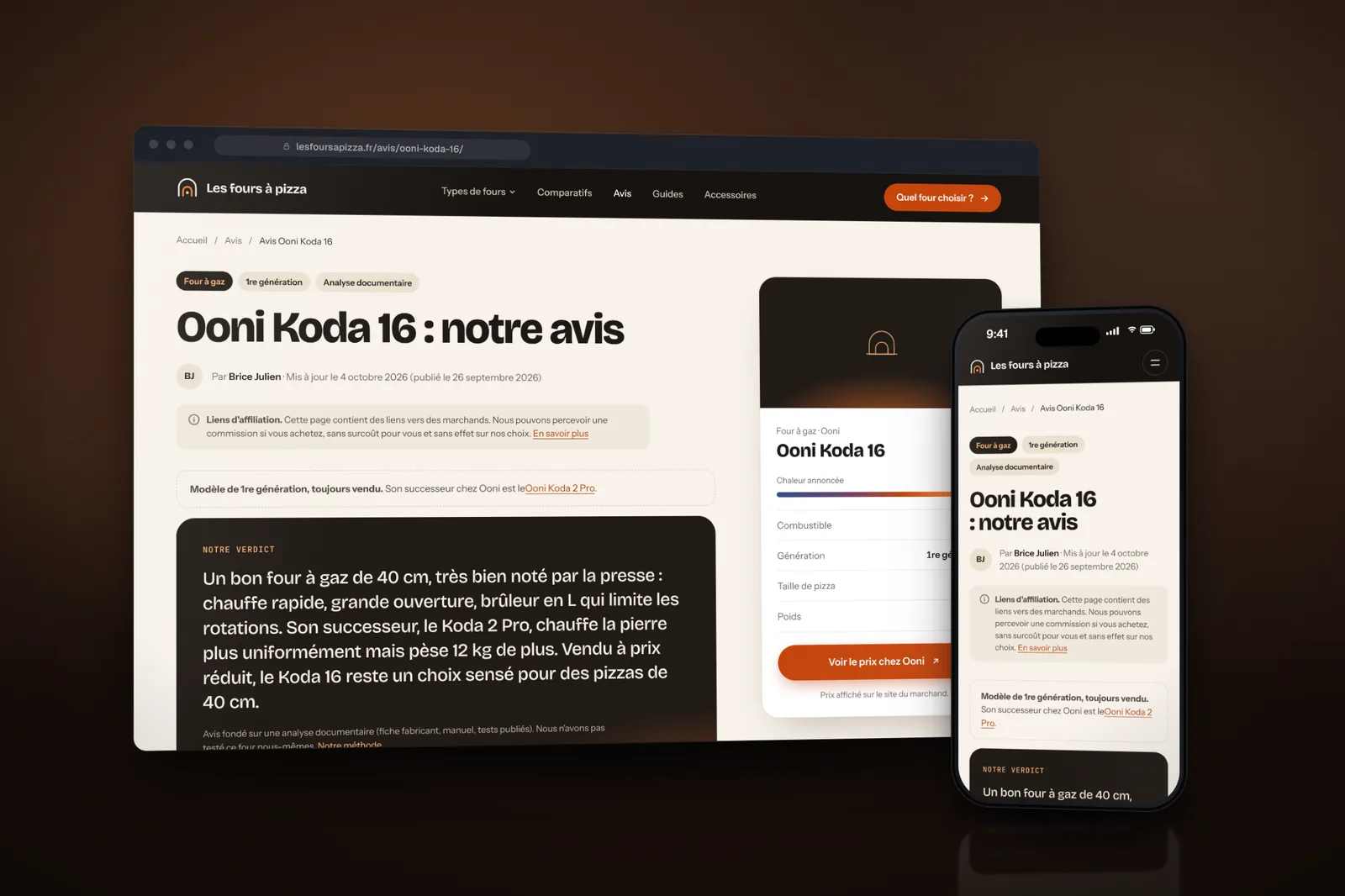
Reviews that are honest about what they are
We haven’t tested the ovens ourselves, and every review says so. They are desk research: manufacturer sheets, manuals and published tests, with every claim linked to its source. No made-up scores, no “tested by us”.
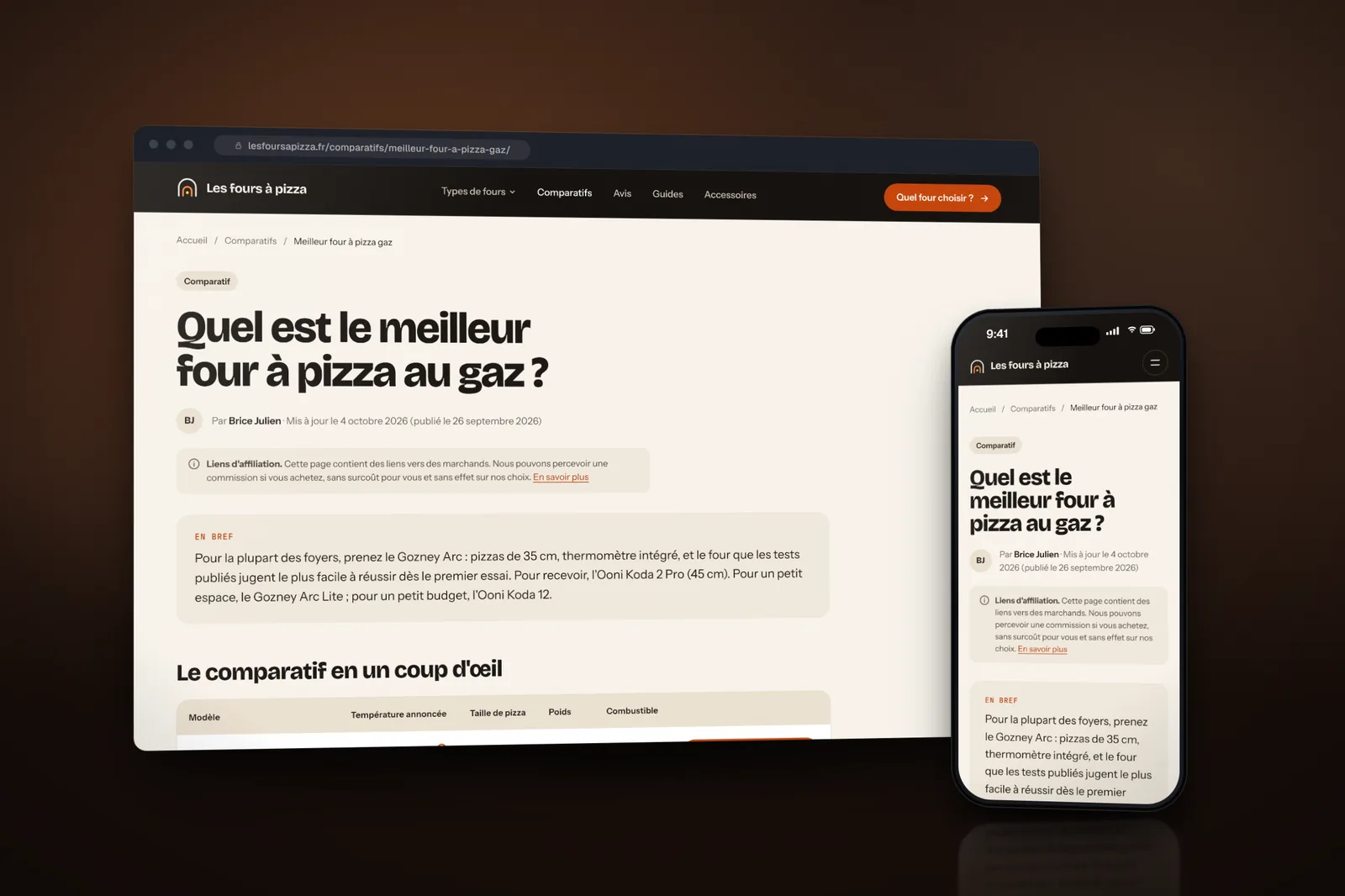
Comparisons built for deciding
The answer comes in the first lines, then the detail. Tables turn into stacked cards on phones. Prices show the date they were checked and disappear after 48 hours, replaced by “See the current price”.
Under the hood
Rules enforced by code, not by good intentions
A static Astro site, fast and secure, whose content is checked on every build.
Content that won’t build if it’s incomplete
Each page type has its schema: a review without a verdict, a product sheet without a source or an overlong meta description blocks publication. An SEO check runs on every build.
Computed internal linking
Every page links up to its pillar and hub and across to its sibling pages, driven by the content’s metadata rather than hand-written links.
Transparent affiliation
A disclosure at the top of every page concerned, merchant links marked as such. Until a merchant has approved the partnership, the site links to it without tracking and shows no price.
No tracking before consent
A consent banner following the French data protection authority’s (CNIL) guidelines, where refusing is as easy as accepting. Analytics and the CRM only load after consent.
A full check before launch
Before opening, every cited source was downloaded and re-read, every product sheet compared with the official one, every figure attributed to a reviewer found in their article. Eight slightly overstated summaries were corrected, along with a misattributed temperature marker. The pages were also reviewed against French consumer law and the law on commercial influence.
Where the project stands
The site has been live since 4 October 2026 and Google is indexing it. Next: the pages of the content plan, one by one, with the same standard of sourcing. The first results will be added to this case study.
A content site to launch?
Search analysis, bespoke design, SEO built in from the start: the same method applies to your project. Let’s talk.